Back
Next
Point to point (sometimes referred to as a port)
Connects a single device to the system.
Addressing not needed to recognized connected device.
Primary addressing established when selecting port by controller.
Dedicated purpose - designed for specific 'device'.
Secondary addressing for functions or data architecture on slave device.
e.g LBA or c/h/s of sectors on hard drive.
Minimal controls and protocol. - Only those for specific devices.
May provide only uni-directional data movement.
Early parallel printer ports - data just flowed from PC to printer.
Multi-purpose - designed to 'recognize' a variety of possible devices.
Primary addressing established by controller but may also include
routing information in transmitted information
USB, Ethernet
Broad range of control support and protocol - for dealing with a
variety of 'devices'.
Bi-directional. May use paired unidirectional lines or may allow
lines to transmit in both directions.
Examples of dedicated purpose ports.
Parallel printer port (IEEE 1284) - printers, zip drives.
 AGP - Advanced Graphics Port - (2004) Video cards.
Interface Video card to mother board.
Modified PCI interface.
Video ports
VGA
AGP - Advanced Graphics Port - (2004) Video cards.
Interface Video card to mother board.
Modified PCI interface.
Video ports
VGA
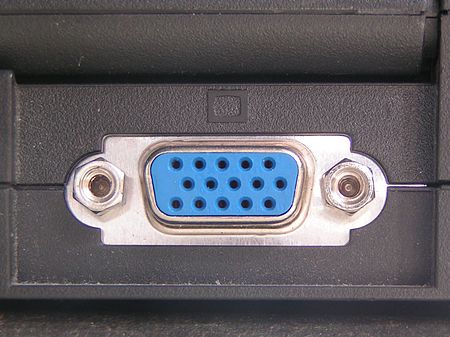 DVI
DVI
 HDMI
HDMI
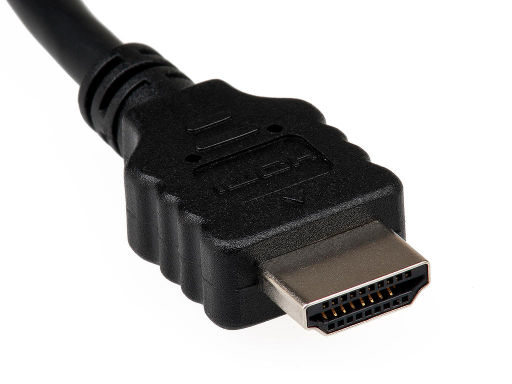
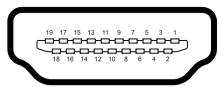 Display-Port - video.
 Mini Display-port
 Uses packetized information - allowing expansion of protocol at
software level.
Keyboard/Mouse * largely replaced by USB.
XT/AT Keyboard port.
PS/2 - keyboard/mouse ports.
Uses packetized information - allowing expansion of protocol at
software level.
Keyboard/Mouse * largely replaced by USB.
XT/AT Keyboard port.
PS/2 - keyboard/mouse ports.
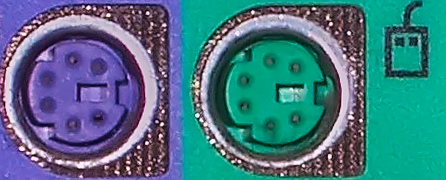 General purpose port.
Wide range of controls and broad protocol.
Bi-directional data transfer or 'lanes' with paths in both directions.
Common ports
PCI-e - hardware point to point. Software multi-port.
internal - but external extension available.
General purpose port.
Wide range of controls and broad protocol.
Bi-directional data transfer or 'lanes' with paths in both directions.
Common ports
PCI-e - hardware point to point. Software multi-port.
internal - but external extension available.
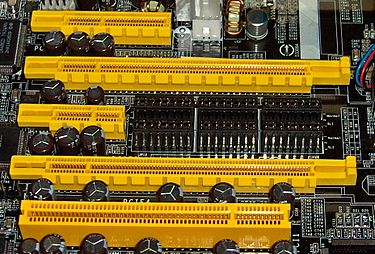 * bottom slot is standard PCI interface.
SATA - storage device interface, Hard drives, CD, DVD, Blu-Ray, SSD
Limited protocol. internal.
eSATA - external interface.
USB - hardware point to point. Software multi-port. External.
Requires master.
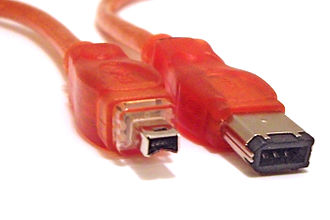
IEEE 1394 (Fire-wire or i.LINK) - alternative to USB. External.
Initially more advanced, built on SCSI protocols.
Uses arbitration - any device may be master.
* bottom slot is standard PCI interface.
SATA - storage device interface, Hard drives, CD, DVD, Blu-Ray, SSD
Limited protocol. internal.
eSATA - external interface.
USB - hardware point to point. Software multi-port. External.
Requires master.
IEEE 1394 (Fire-wire or i.LINK) - alternative to USB. External.
Initially more advanced, built on SCSI protocols.
Uses arbitration - any device may be master.
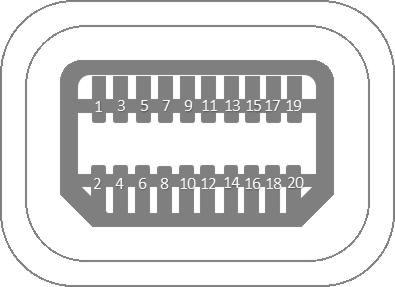
 Thunderbolt - combination of Display Port and PCI-e. External.
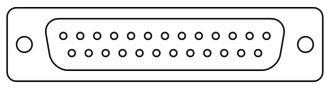
 ISA Serial port (RS232) - 1980s, modems, printers. External
Very limited protocol but very flexible. Fairly standardized
physical layout.
ISA Serial port (RS232) - 1980s, modems, printers. External
Very limited protocol but very flexible. Fairly standardized
physical layout.
 * Some of these can use hub or daisy chain implementation allowing a
single port from controller to multiple devices.
Addressing usually implemented via software packets.
Multi-point Bus - physically connects multiple devices.
Addressing - broadcast to each device, requiring additional decoding
or selection at device or port interface.
Bi-directional data movement.
Generic controls for unknown devices.
Timing, handshaking, data direction.
Common buses.
XT, AT bus. Internal.
PCI bus. Internal.
Parallel ATA - hard drive/Optical drive interface. Internal.
IEEE-488 GPIB. External.
* Some of these can use hub or daisy chain implementation allowing a
single port from controller to multiple devices.
Addressing usually implemented via software packets.
Multi-point Bus - physically connects multiple devices.
Addressing - broadcast to each device, requiring additional decoding
or selection at device or port interface.
Bi-directional data movement.
Generic controls for unknown devices.
Timing, handshaking, data direction.
Common buses.
XT, AT bus. Internal.
PCI bus. Internal.
Parallel ATA - hard drive/Optical drive interface. Internal.
IEEE-488 GPIB. External.
 Networked
Broadcast.
Point to point with routing to further points.
Addressing.
Source/destination address.
Source/destination ports.
Address, data, and control implemented at the software/packet level.
Often missing power bus.
Can span much greater distances that system level buses.
* Port also refers to the physical connection and can exist on
multi-point connections, USB, IEEE 1394 (Fire-wire), SCSI
Networked
Broadcast.
Point to point with routing to further points.
Addressing.
Source/destination address.
Source/destination ports.
Address, data, and control implemented at the software/packet level.
Often missing power bus.
Can span much greater distances that system level buses.
* Port also refers to the physical connection and can exist on
multi-point connections, USB, IEEE 1394 (Fire-wire), SCSI